In 1825 a Chinese opera troupe came to Kathu, a tin-mining settlement in inland Phuket, to perform for the Chinese miners. Then the troupe got sick, and so did the town.
National Geographic’s version says it was cholera. Whatever it was, the actors decided they knew the cause. Back home, they kept a rite for the Nine Emperor Gods every ninth lunar month. This year, a long way from home, they had skipped it.
Nobody in the troupe knew the full ceremony, so they improvised one at the theater. The sickness passed. The town has repeated the rite every year since. Kathu marked the 200th year in 2025.
That’s the polite version of how the Phuket Vegetarian Festival started. It doesn’t prepare you for the parade.
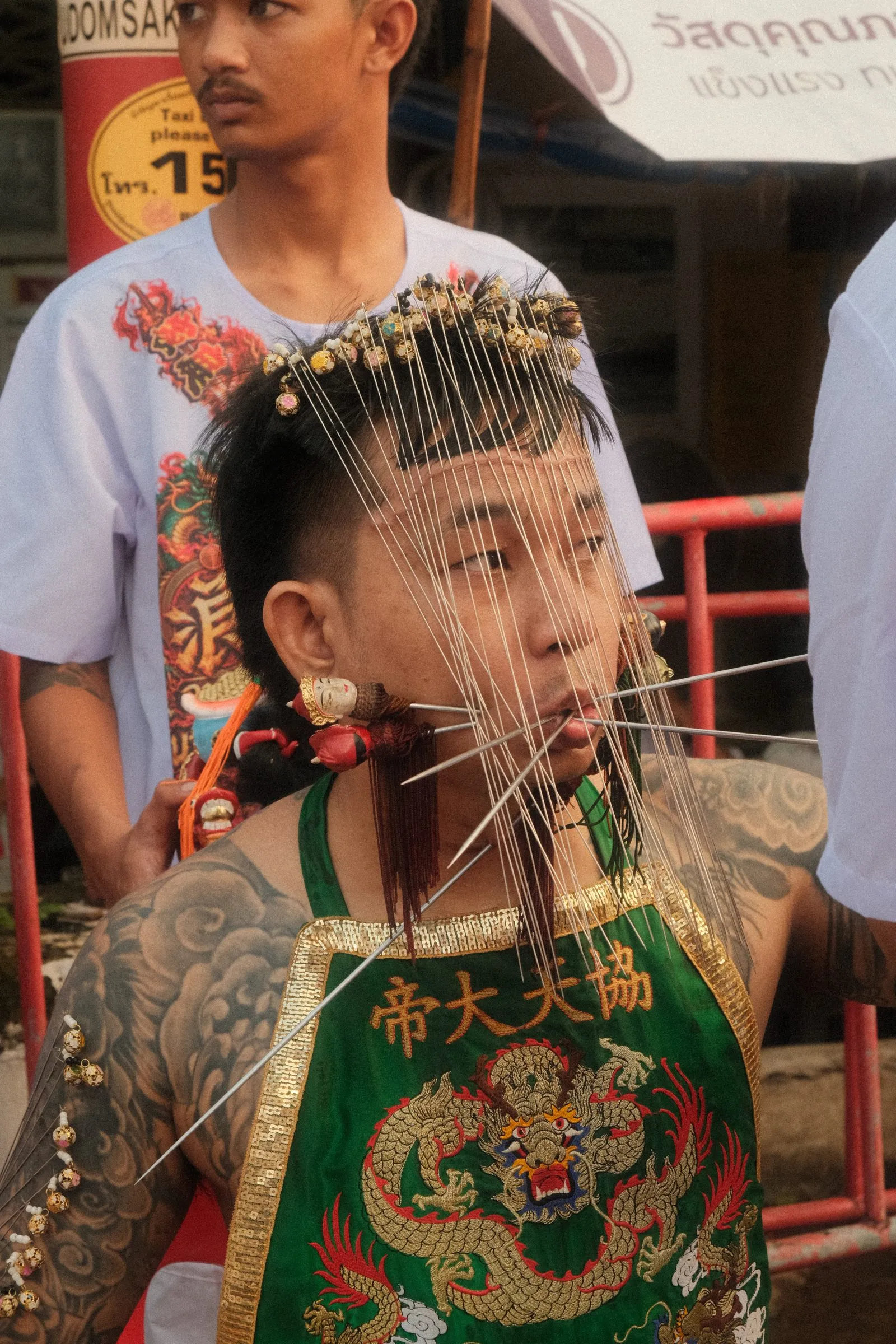
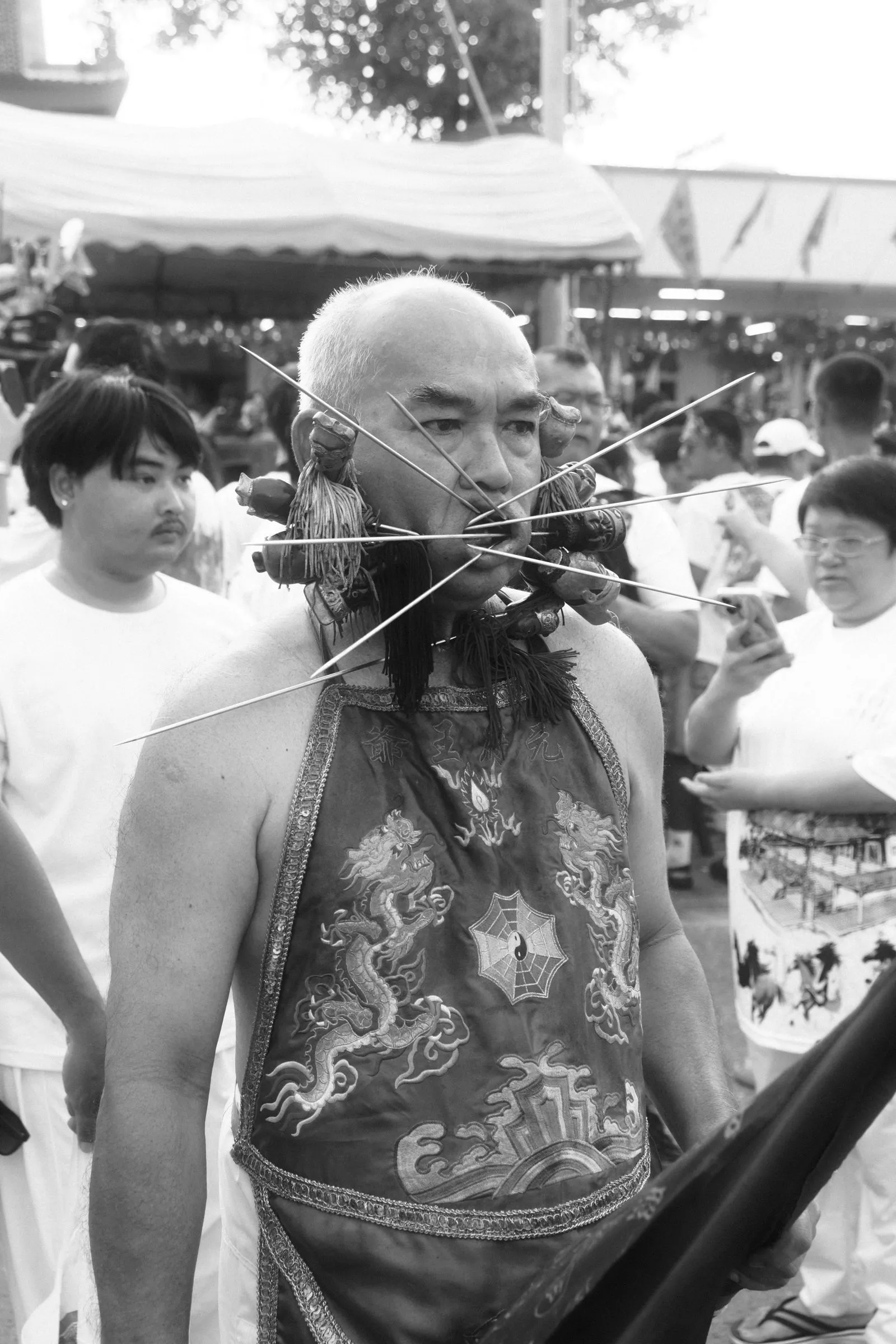
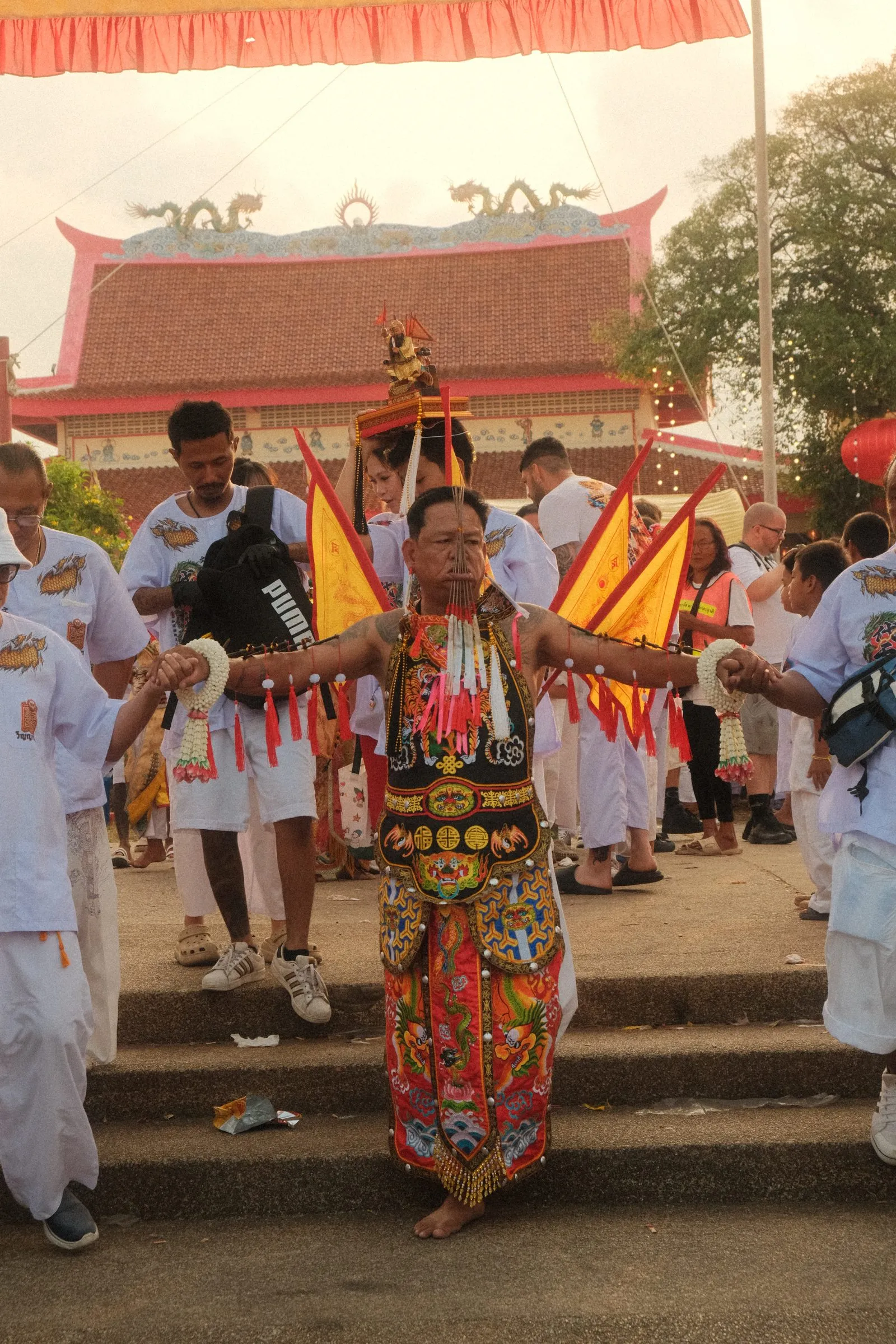
I was there for the piercings and the processions of the ma song, the people the gods are said to ride. Here’s what I was looking at.
Nine gods, one constellation
The Nine Emperor Gods are the Big Dipper: seven visible stars plus two assistant stars most people can’t see. Their mother, Dou Mu, the Mother of the Dipper, keeps the register of life and death.
They come down to earth for nine days a year. On the evening before the festival, every shrine raises a tall pole called the Go Teng to invite them. It comes back down the day after it ends. This year that meant up on October 9, down on October 19.
No meat, no garlic, no sex
For those nine days, devotees keep ten rules. Wear white. No meat and no animal products at all, eggs and milk included. No garlic or other strong-smelling food, which in Thai cooking rules out a lot. No alcohol, no sex, no lying, cheating or stealing. Separate pots and utensils. People in mourning stay away, and pregnant or menstruating women don’t take part.
Stalls selling compliant food hang yellow flags printed with a red character, 齋. In Thai it’s read as jay, which is why the festival is kin jay, “eating jay.” It means something like purity. Phuket 101 makes a good point about it: the flag is a religious instruction, not a menu label.
The horses
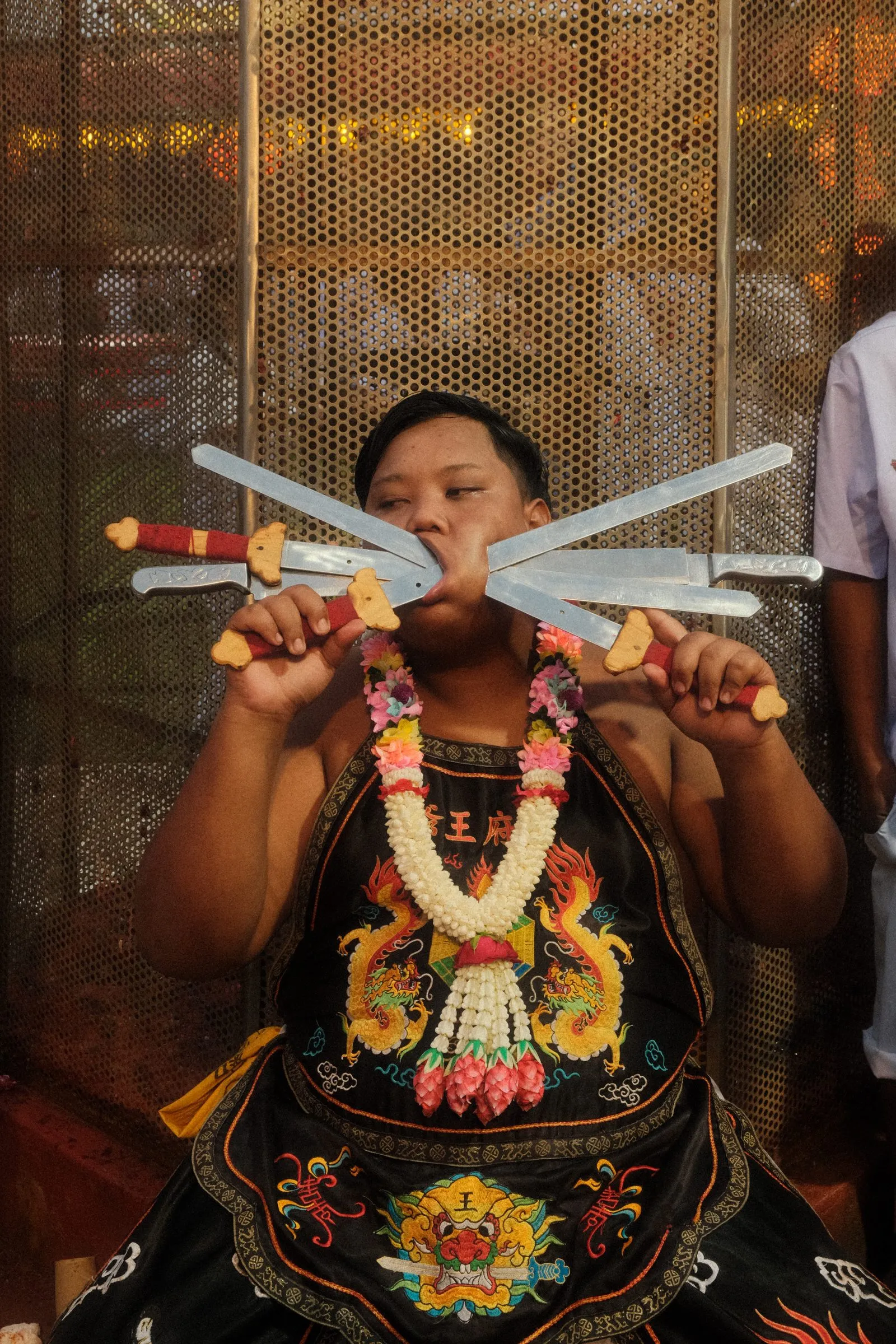
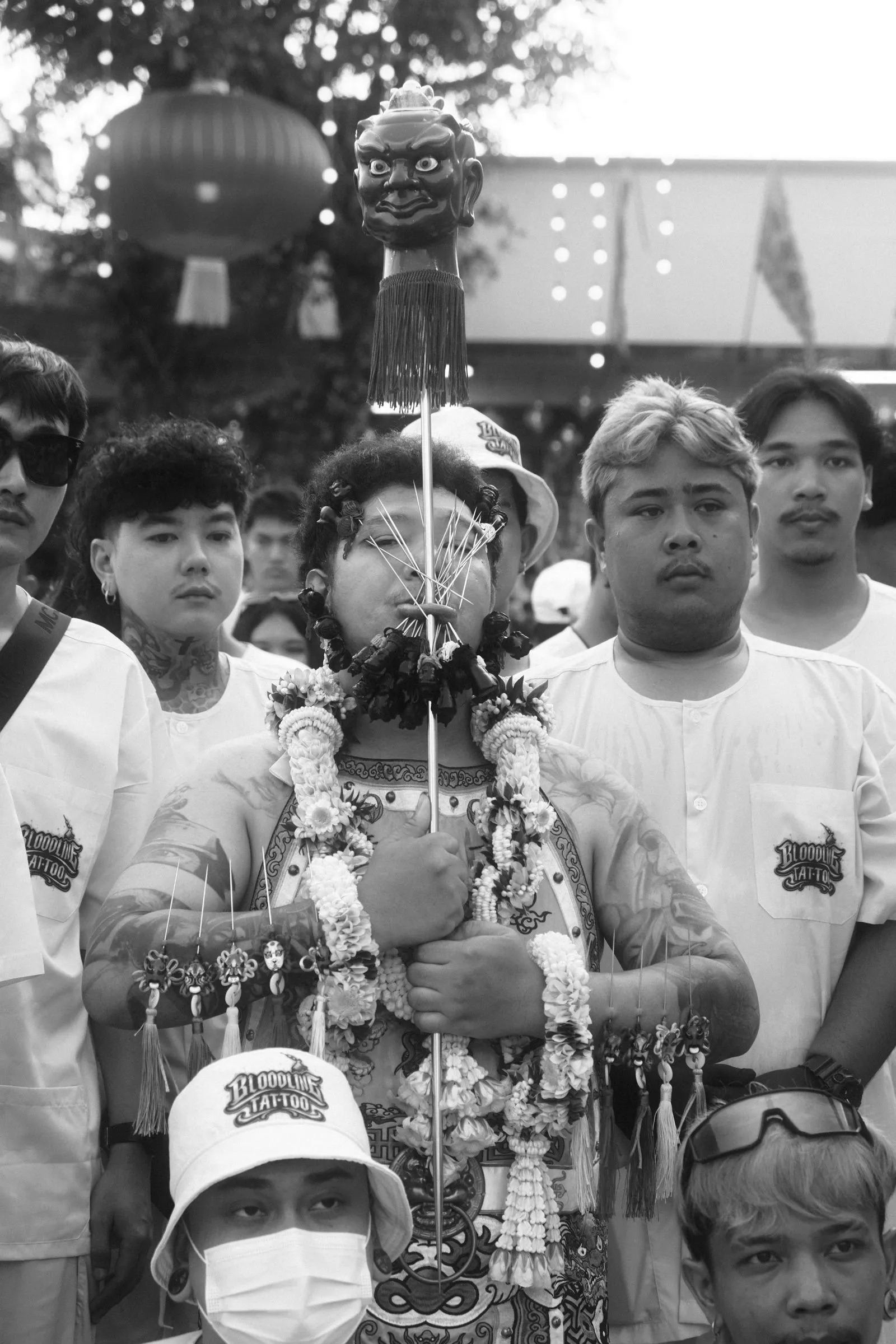
Ma song means, roughly, “entranced horse.” A local guide explained it to National Geographic as the horses the gods ride. The medium is the horse and the god is the rider. That’s the whole logic of the piercing: for the day, the body belongs to the god, and the god doesn’t feel it.
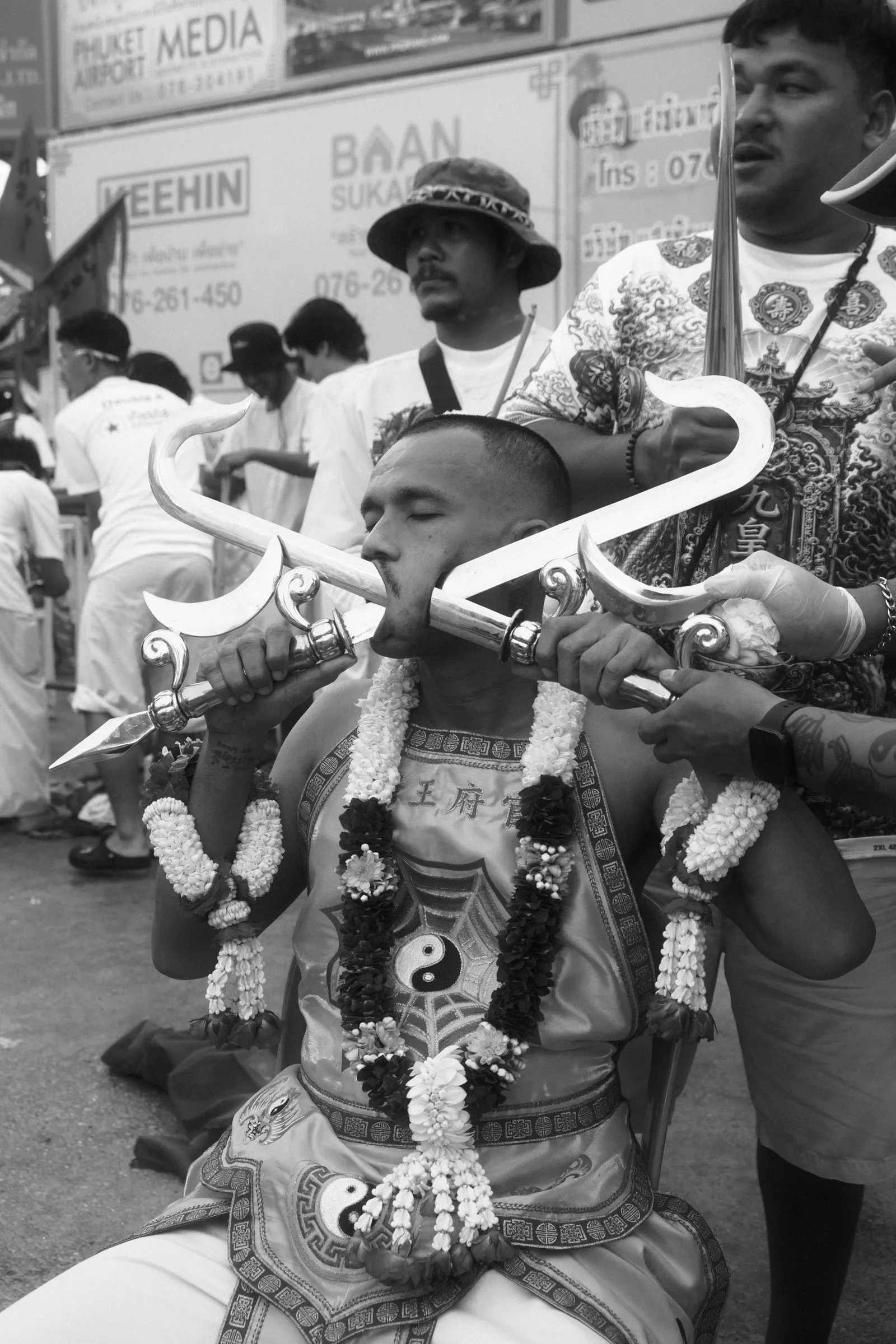
It’s protective, too. As Phuket 101 puts it, the medium takes on other people’s misfortune so the community gets its luck back.
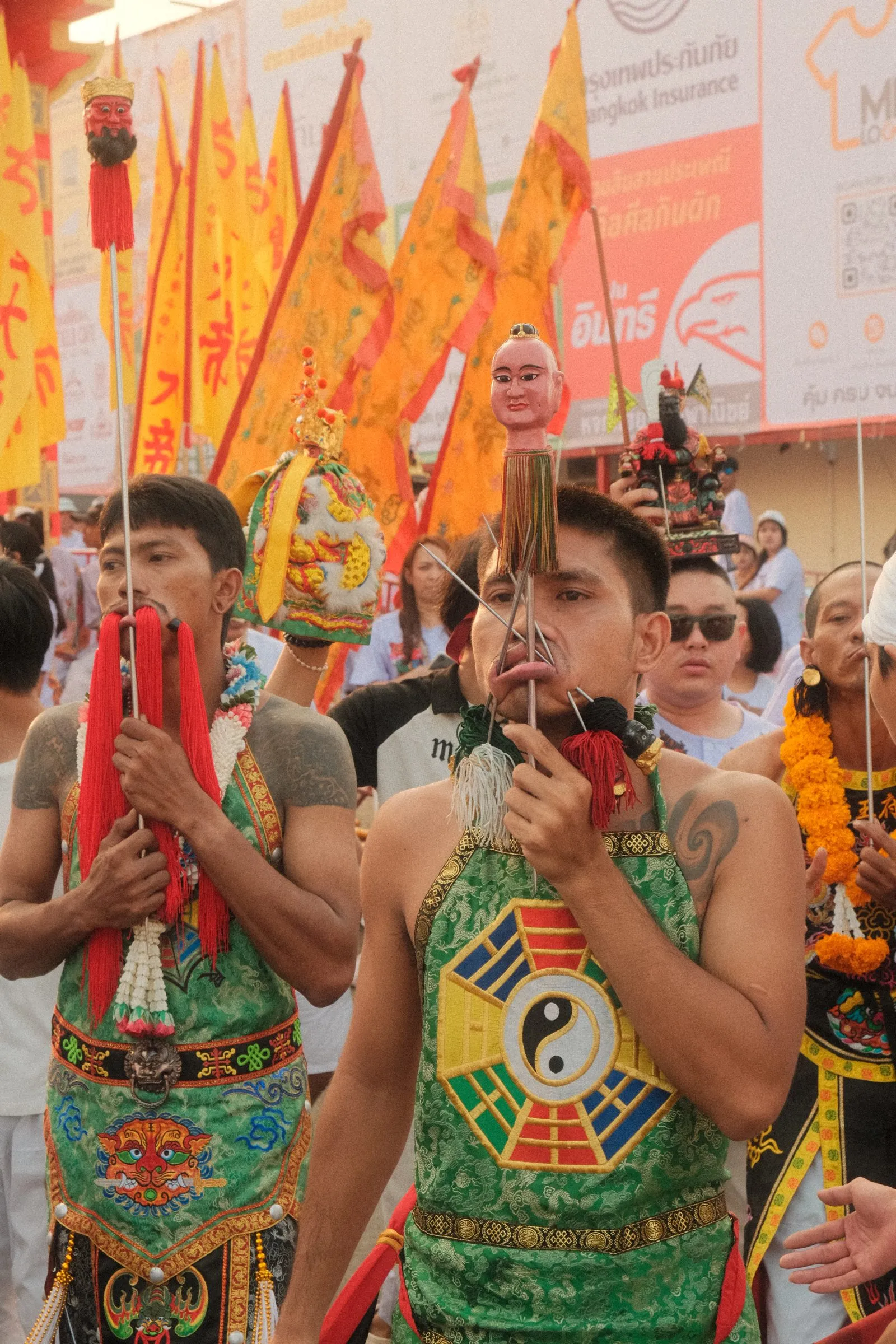
The ma song go into trance at their shrine, and the piercing happens there. Most of it goes through the cheeks. National Geographic’s reporter saw foot-long skewers, a ball of spikes, and two men with swords through both cheeks, crossed inside their mouths. A 2012 NBC photo essay lists knives, skewers and “other household items,” a phrase doing a lot of work.
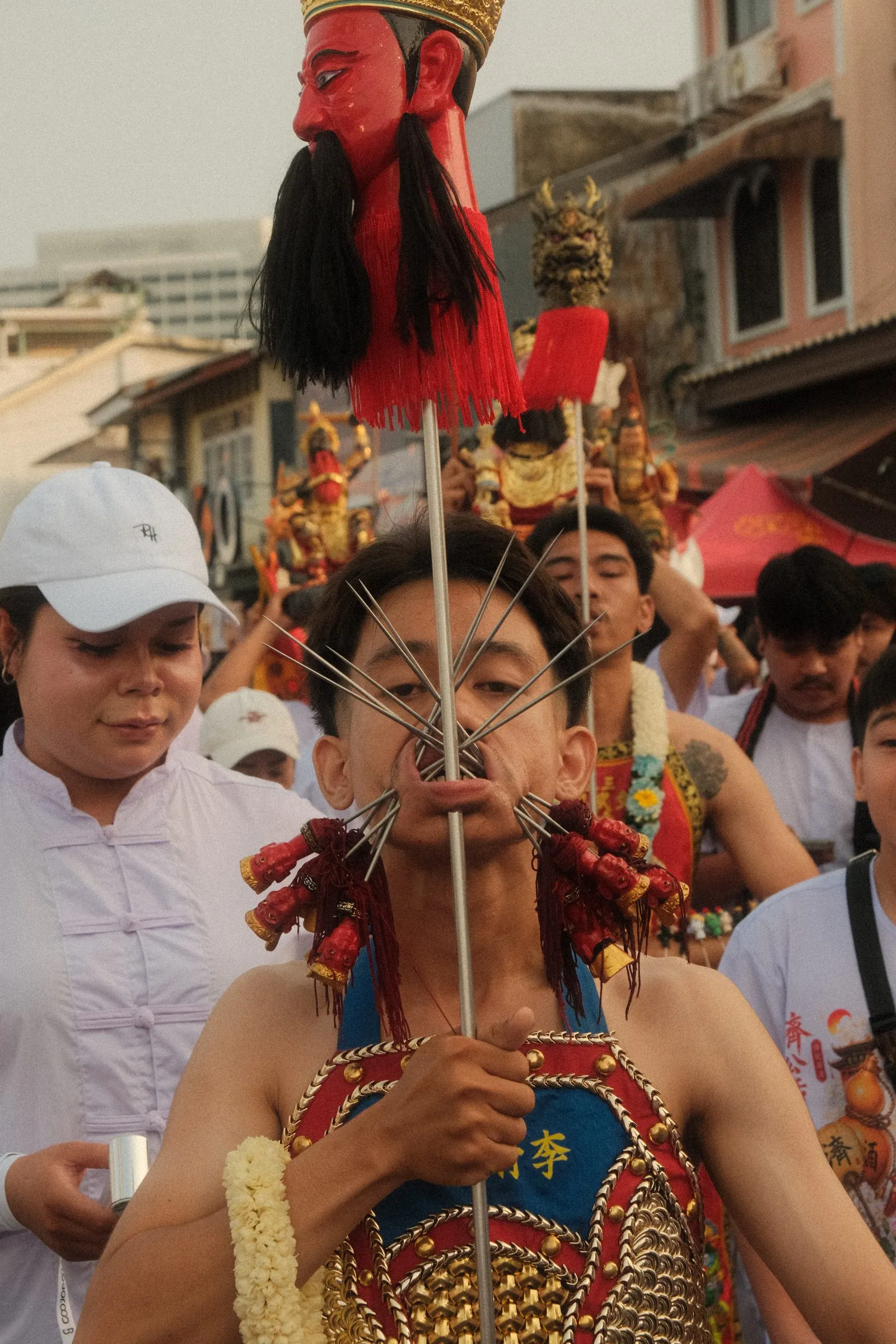
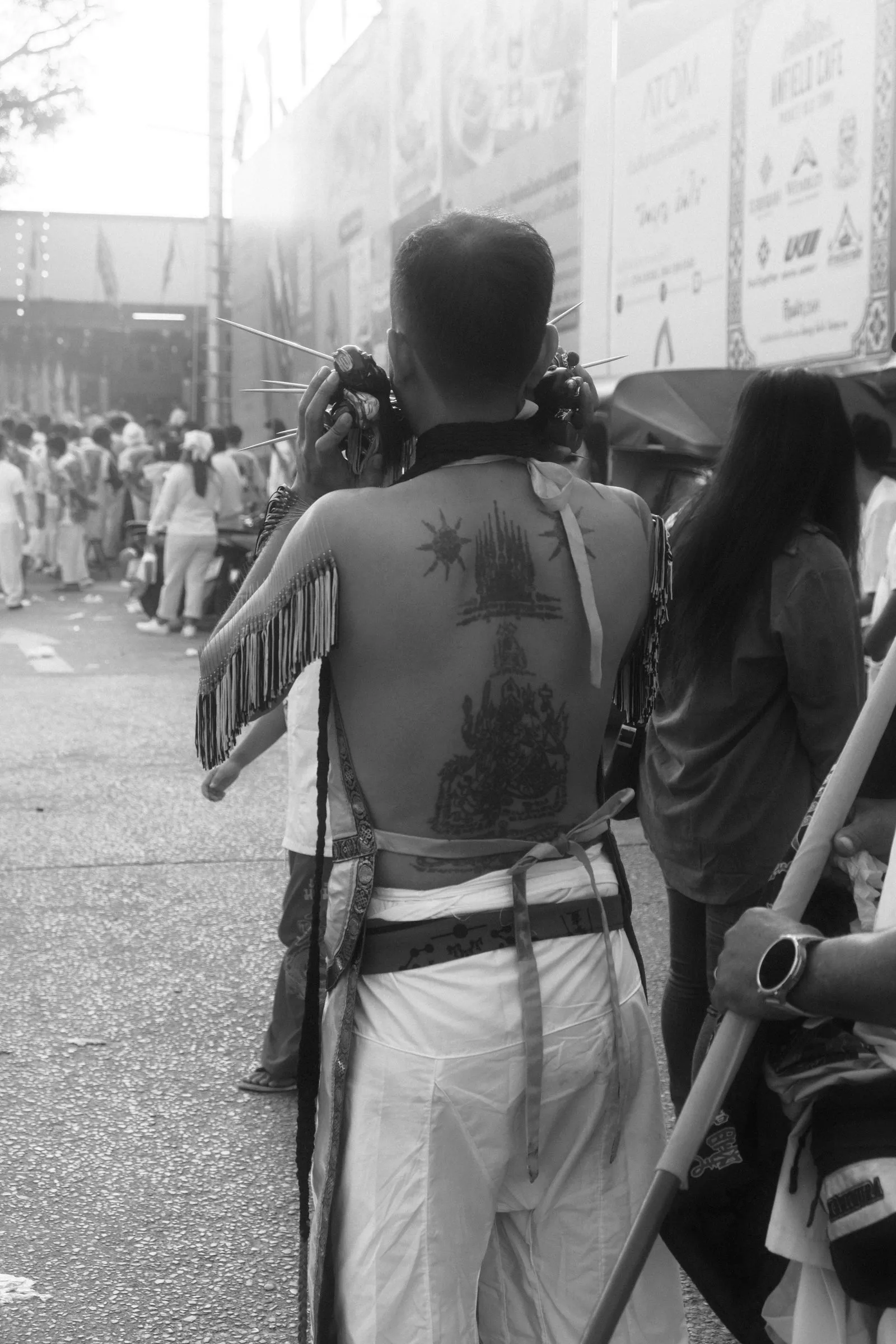
One medium, Pai, told National Geographic that every procession morning starts with dread about the piercing, and then there’s no pain at all. The day after, according to the same piece, a tiny dark spot on each cheek was the only sign anything had happened. On the day that reporter went, in 2024, there were around 1,900 ma song.
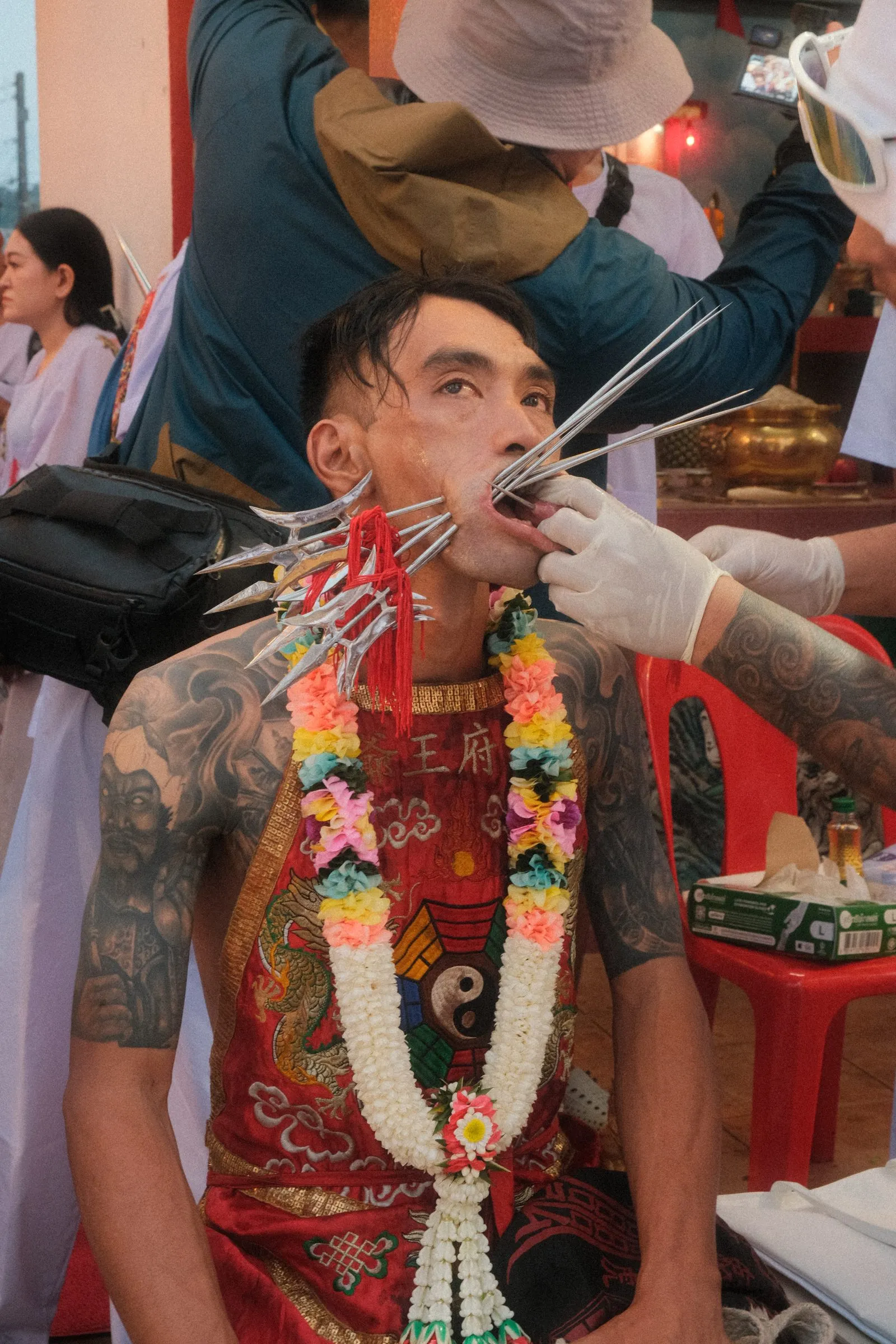
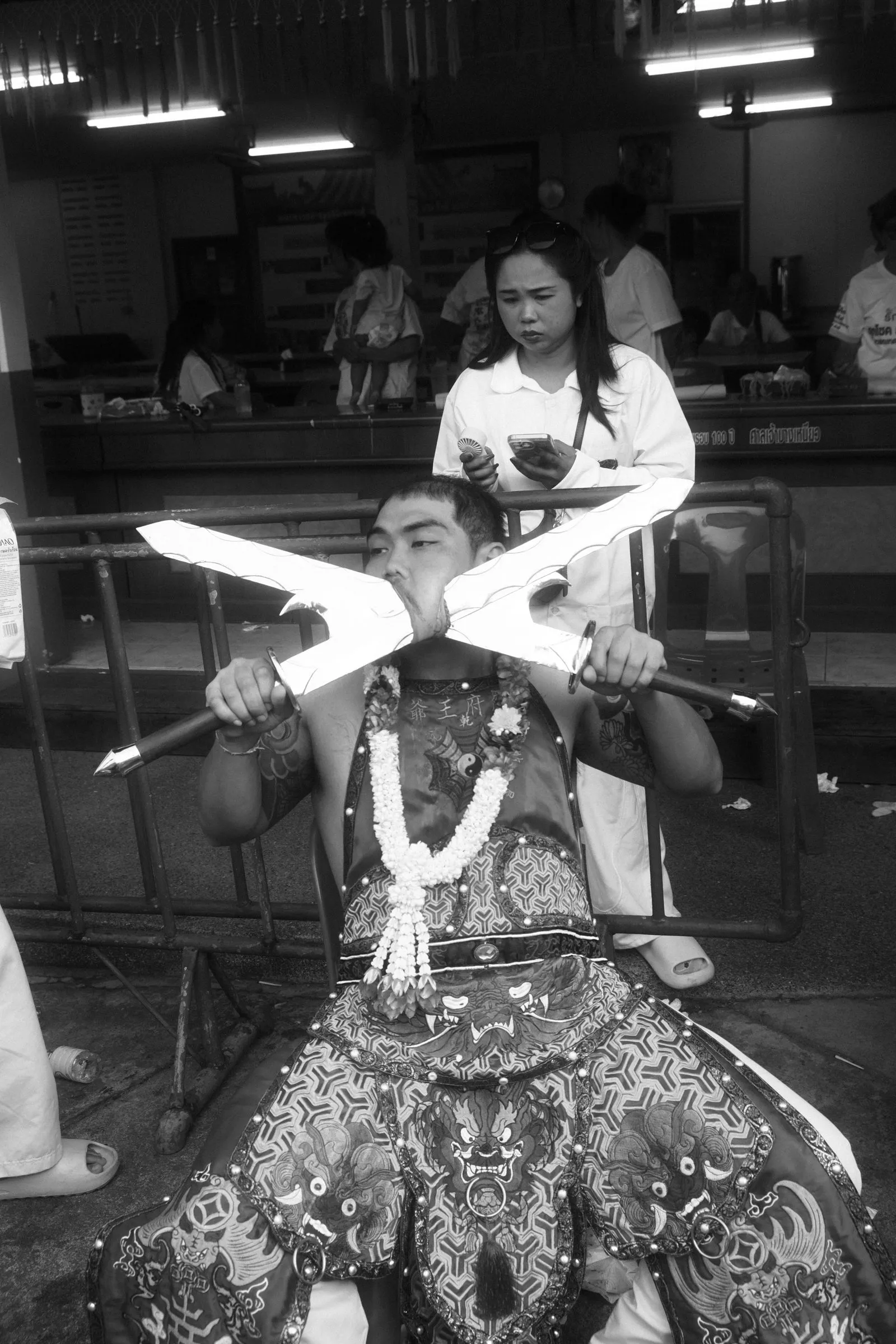
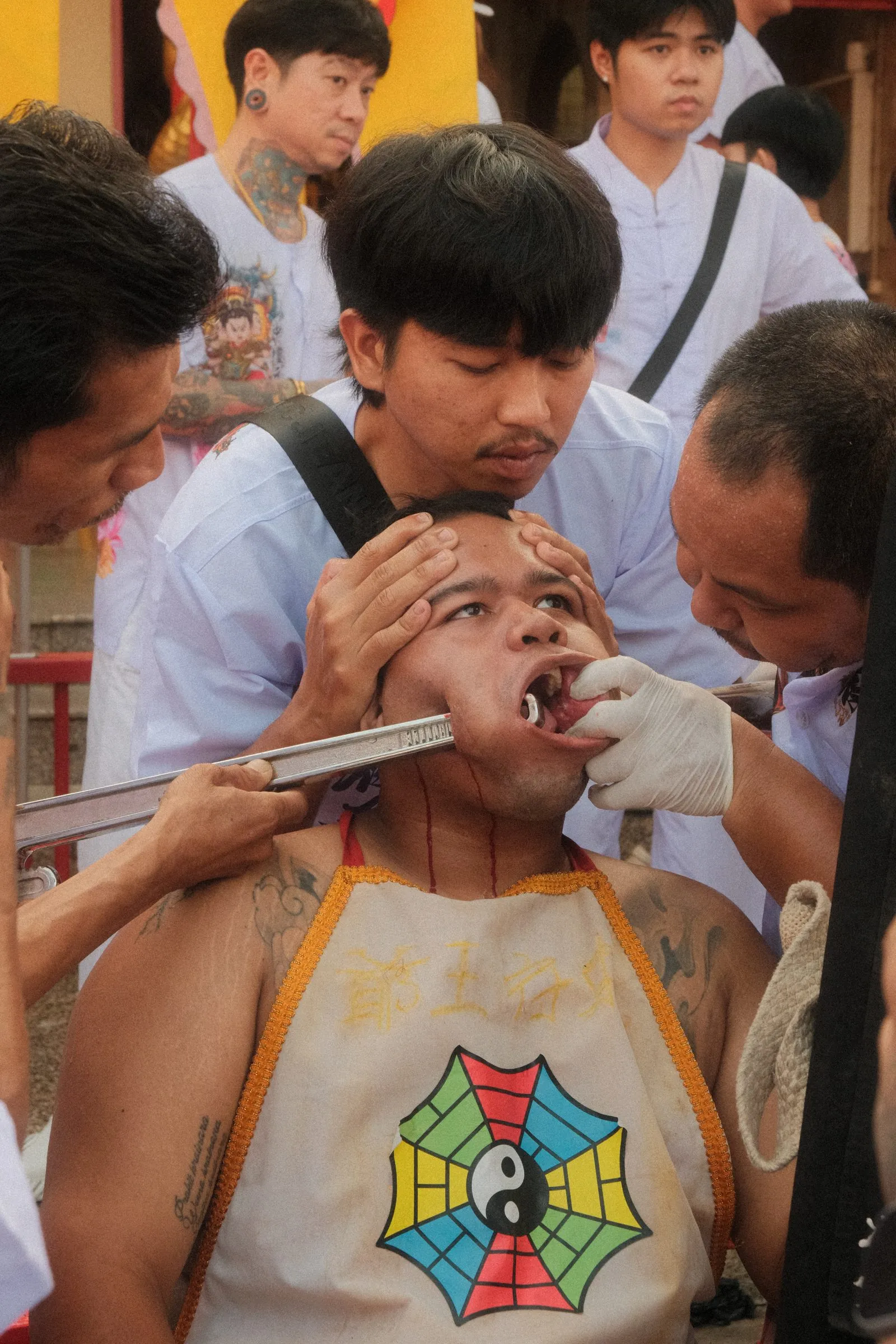
Painless, maybe. Bloodless, no. I watched an attendant in a latex glove work a steel rod through one devotee’s cheek, and it bled down the chin and neck.
So who signs up? Erik Cohen, the anthropologist who wrote the standard book on this festival, published a 2012 paper comparing ma song with Western “modern primitives,” the body-modification crowd. The finding: very different beliefs, similar marginal social backgrounds. For nine days a year, though, families set out tables of offerings in front of their houses and wait for the ma song to walk past and bless them.
Bring earplugs
The crowd throws firecrackers at the procession by the string, in absurd quantities. They’re there to welcome the gods. They also take your hearing with them, so buy earplugs at an Old Town pharmacy before you go.
Not all of it is devotional. In 2019 The Thaiger ran an op-ed arguing the festival had turned into a show for cameras and tourists: young participants in white still drinking and smoking, and firecrackers thrown at passing motorbikes, pedestrians and cars.
How it lives on
Two hundred years on, 31 shrines send processions through the streets over the nine days, most leaving between 6 and 8 in the morning. The evenings have their own rituals. Shrines across the island hold fire walks over hot coals. A few put up a ten-meter ladder with 72 razor-sharp blades for rungs and send devotees up it.
On the last night, processions from all over the island converge on Saphan Hin, at the edge of Phuket Town, to see the gods off. The main rites happen after midnight, in so much firecracker smoke that the town more or less disappears.
Kathu Shrine holds its fire walk at 3 pm, in full daylight, about five hours before most other shrines. The scripture book that governs the rites was brought back from China and is kept in a locked room there. It never leaves the shrine.
The tin mines are gone. So is the troupe. Their patron, Tian Hu Nguan Soi, the god of Chinese opera, is still the main deity on Kathu’s altar.
If you go
- It follows the lunar calendar: the first nine days of the ninth lunar month. This year that was October 10 to 18.
- Processions mostly leave between 6 and 8 am. Get there early.
- Wear white, long sleeves, long trousers and closed shoes. Firecracker debris lands on you.
- Earplugs, a mask for the smoke, and glasses for the debris.
- Stay back from the front and sides of the procession.
- Don’t touch the ma song or anything they’re pierced with, and ask before taking close-ups of anyone in trance.
- Jui Tui, in Old Town, draws the biggest crowds. Kathu is where it started.